1. The New Search Reality: Ranking in Answer Engines
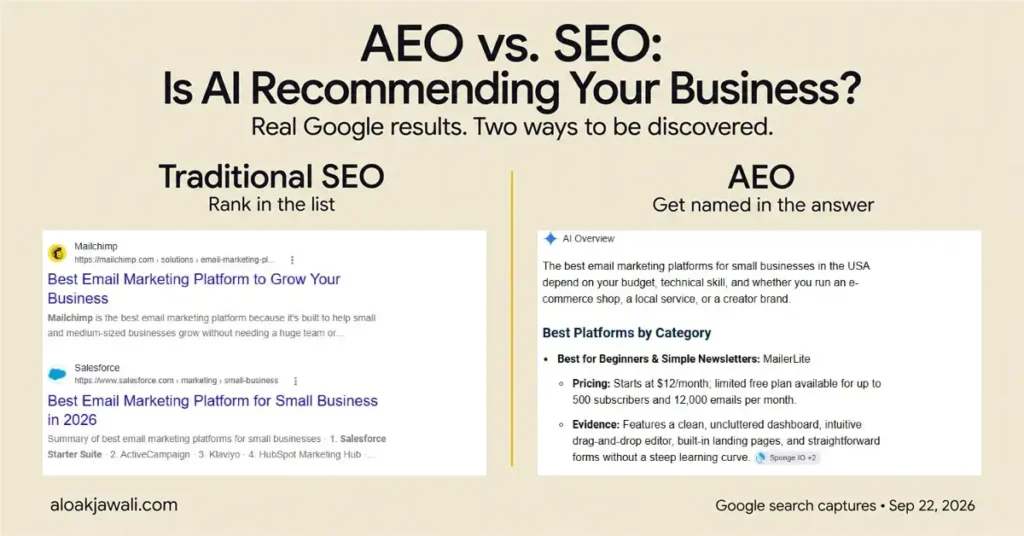
If you spend time browsing r/SEO, r/TechSEO, or r/bigseo, you’ve witnessed a fundamental shift in organic discovery: traditional rank tracking across Google’s standard ten blue links is no longer enough. Potential customers routinely ask AI assistants like ChatGPT, Perplexity, Claude, or Google AI Overviews for direct purchasing recommendations, such as “What is the best CRM for a five-person dental clinic?” or “Who is a dependable emergency roofer in Austin?”
When an AI engine synthesizes an answer, your business is either cited as a recommended authority or completely omitted from consideration. Being left out at the exact moment a buyer seeks advice means losing pipeline before prospects ever reach a search results page.
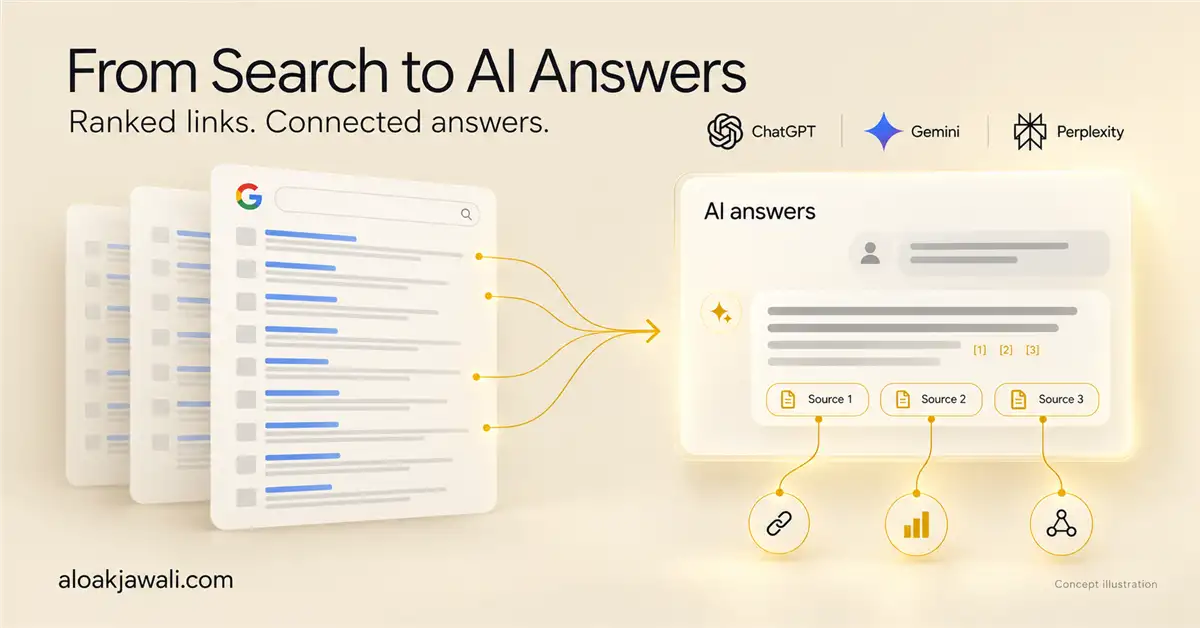
To monitor this blind spot, modern teams rely on AI Visibility Tools (often categorized under Generative Engine Optimization / GEO, Answer Engine Optimization / AEO, or LLM monitoring). These platforms submit target prompt clusters across major AI models on an automated schedule, tracking your brand’s mention frequency, hyperlinked citations, sentiment, and share of voice relative to competitors.
However, the market is crowded with overpriced API wrappers. To cut through the marketing noise, we reviewed discussions across active SEO subreddits where real practitioners share unvarnished feedback, audited every vendor’s pricing in October 2026, and tested what each platform actually delivers after the free trial ends.
Core Industry Terminology
- AI Visibility & Share of Voice (SoV): The percentage of relevant conversational queries where an AI model mentions or recommends your brand.
- Citations vs. Mentions: A citation is an active hyperlink back to your website inside an AI response; a mention is your brand or product name appearing in text without a link.
- Generative Engine Optimization (GEO): Optimizing content structure, digital PR, and brand authority so AI models cite your domain.
- Answer Engine Optimization (AEO): Formatting and marking up content (via schema and structured Q&A) so answer engines can extract direct factual answers.
- Prompt Cluster Tracking: Monitoring a consistent battery of natural-language buyer prompts over time to gauge directional visibility trends.
2. At a Glance: 14 AI Visibility Tools Compared
Four of the 14 platforms feature permanent free tiers or initial credit pools (AEO Copilot, AthenaHQ, LLMrefs, and Cite42). The remaining ten provide free trials, interactive audits, or one-time lifetime licenses before requiring a monthly commitment. All prices reflect monthly rates in US dollars unless otherwise specified, verified in October 2026.
| Platform | Best Suited For | Free Tier / Trial Option | Starting Paid Tier |
|---|---|---|---|
| AEO Copilot | Founders, freelancers, and small agencies using AI agents | Free forever: 1 brand, 50 prompts/mo (ChatGPT & Claude) | $9 / month |
| AthenaHQ | SMBs and enterprises wanting actionable content guidance | Free Essential plan with $25 credit (300 AI responses) | $295 / month |
| LLMrefs | SEO teams who prefer tracking keyword lists over raw prompts | Free account tier (no credit card required) | $79 / month |
| Cite42 | Technical teams and developers wanting pay-as-you-go APIs | $1 free signup credit (no subscription required) | $0.01 / model check ($25 min top-up) |
| Promptmonitor | Agencies and SMBs wanting combined answer and crawler logs | Free AI visibility snapshot; free agency partner tier | $29 / month |
| BrandPresence | Analytical teams demanding statistically repeatable sampling | Free snapshot audit + 7-day trial (no card needed) | €149 / month |
| Profound | Enterprise organizations running cross-model search at scale | 7-day trial (50 pre-set prompts daily across 3 engines) | Custom enterprise quotes |
| Otterly.AI | Solo marketers and mid-size teams seeking an all-rounder | Free trial period plus standalone free GEO audit tools | $29 / month ($25/mo billed annually) |
| Wellows | Brands seeking all five primary engines on every plan | 7-day free trial plus free AI visibility audit | $29 / month |
| SnowSEO | Growth teams wanting tracking plus automated content fixes | 7-day trial (card required) and free site audit | $49 / month ($41/mo billed annually) |
| Knowatoa | Marketers needing clean competitor gap analysis and reporting | Free trial period | $59 / month |
| Peec AI | In-house teams prioritizing daily competitor gap tracking | Free trial period | $95 / month (third-party verified) |
| SEO.ai | Founders wanting an autonomous agent for writing and ranking | 7-day trial plus free AI SEO utilities | $149 / month |
| phpLens by Lunatio | Developers and agencies seeking self-hosted data ownership | Live interactive product demo | $49 one-time lifetime license |
Pricing Verification Note: Because Peec AI does not publish pricing in plain text on their main landing page, the $95 Starter figure reflects verified directory listings on Capterra and PricingSaaS. Always confirm current tier terms directly with vendors.
3. The Free Baseline First: Google & Bing Telemetry
Before allocating budget to third-party scraping tools, activate the free first-party reporting suites provided directly by search engines. Reddit practitioners emphasize this sequence for a critical reason: third-party scrapers simulate user sessions, whereas first-party consoles report real impressions and actual citations recorded on live search infrastructure.
Google Search Console: Generative AI Performance
Google introduced a dedicated Generative AI performance report inside Search Console in June 2026, initially piloting across UK domains before widening its international rollout. This dashboard isolates how your URLs perform across Google AI Overviews, AI Mode, and AI-assisted Discover feeds, keeping generative metrics separate from traditional search performance.
- What It Measures: Raw impression counts segmented by landing page, country, user device, and timeline.
- Current Limitations: The report does not yet report click counts or click-through rates (CTR) for generative summaries, and historical backfill is unavailable prior to mid-May 2026.
- Why It Matters: It provides an unmanipulated, server-level log of your visibility within Google’s proprietary AI ecosystem.
Bing Webmaster Tools: AI Performance Dashboard
Microsoft Bing’s AI Performance report monitors citation activity across Microsoft Copilot, Bing’s native generative summaries, and partner integrations. Bing structures its telemetry around ‘Grounding Queries’ the semantic search queries generated behind the scenes by Copilot to retrieve factual context and pairs them with your cited landing pages.
- What It Measures: Total citations earned, distinct pages cited, and your brand’s citation share per grounding query.
- Current Limitations: Referral click attribution remains unpopulated in early builds.
- Rapid Setup: Sign in with your Microsoft account, select ‘Import sites from Google Search Console,’ and verified data typically populates within 24 to 48 hours.
Once both native consoles are active, you have an objective foundation. Paid tooling can then fill the critical blanks: monitoring independent chat platforms (ChatGPT, Perplexity, Claude, Gemini) and conducting competitive intelligence.
4. AI Visibility Tools with Genuine Free Access
These four platforms provide permanent free plans or starter credits, allowing you to test prompt variations and build an initial benchmark before committing capital.
1. AEO Copilot
Best for: Freelancers, solo operators, and engineering-minded marketers using AI assistants.
AEO Copilot delivers one of the most practical free tiers in the category. Without requiring a credit card, users can track one brand across 50 prompts per month on ChatGPT and Claude, with metrics refreshing monthly.
- Engine Coverage: Tracks ChatGPT, Claude, Perplexity, Gemini, and Google AI Overviews (the latter simulated via Gemini and live search grounding). Paid tiers monitor any four engines concurrently.
- Technical Highlight: Features a built-in Model Context Protocol (MCP) server, allowing development and content tools like Claude Code, Cursor, or OpenAI Codex to query your visibility data directly inside your IDE.
- Paid Upgrades: The Startup plan costs $9/month for full 4-engine coverage, API/MCP access, and weekly scans. The Freelancer tier ($34/month) manages five brands with white-label reporting, while Agency ($99/month) supports unlimited brands and 600 monthly prompts.
- Real-World Trade-Off: Focuses purely on tracking and strategic recommendations; it does not write or auto-publish content. Support is managed directly by the solo founder.
2. AthenaHQ
Best for: Mid-sized businesses and agencies that want actionable editorial guidance.
AthenaHQ functions as a full-featured GEO platform that lets teams test its workflow without upfront fees. Its Essential plan provides an initial $25 credit balance, translating to roughly 300 AI answer checks.
- Engine Coverage: Free testing spans ChatGPT, Perplexity, Google AI Overviews, Gemini, and Copilot.
- Strategic Highlight: Even free accounts receive content optimization recommendations generated by Athena’s proprietary agent, along with multi-seat team access.
- Paid Upgrades: The Starter package runs $295/month for 3,600 monthly credits across 11 AI models including Claude, Google AI Mode, Grok, DeepSeek, Meta AI, and Mistral. It introduces unlimited topics, competitor monitoring, and native integrations with GA4 and Search Console.
- Real-World Trade-Off: A 300-credit balance depletes rapidly during testing. Evaluating 10 prompts across 5 engines consumes 50 credits per run, yielding only six complete passes.
3. LLMrefs
Best for: Traditional SEO teams transitioning from keyword tracking to prompt monitoring.
Rather than requiring you to craft conversational prompts manually from scratch, LLMrefs accepts standard keyword lists and programmatically converts them into the conversational, multi-step queries real users submit to LLMs.
- Engine Coverage: Tracks an extensive roster including ChatGPT, Google AI Overviews, AI Mode, Gemini, Perplexity, Claude, Grok, Microsoft Copilot, Meta AI, and DeepSeek.
- Strategic Highlight: Calculates brand share of voice and average citation rank across aggregated prompt clusters, providing statistical confidence. Geo-targeting spans 50+ countries and 20+ languages.
- Paid Upgrades: The All-in-One plan ($79/month) tracks 500 prompts across all supported models with unlimited team seats, CSV export, and API access.
- Real-World Trade-Off: Scans run on a weekly schedule rather than daily. Specific prompt volume caps on the free tier require testing upon signup.
4. Cite42
Best for: Technical teams, product developers, and automation engineers.
Cite42 completely abandons the recurring SaaS subscription model. Operating as a pay-per-call REST API and MCP server, it allows technical teams to query model visibility on demand and pay only for actual execution costs.
- Engine Coverage: Queries ChatGPT, Claude, Perplexity, Gemini (via official search-grounded APIs), and live Google AI Overviews.
- Pricing Structure: Users receive $1 in free trial credit upon signup. Subsequent checks cost roughly $0.01 per model, allowing a 5-model query across your brand to execute for roughly $0.20. Minimum balance top-ups start at $25 and never expire.
- Strategic Highlight: Blends LLM visibility metrics with real-time keyword volume, Google Trends signals, and social discussions from Reddit and YouTube.
- Real-World Trade-Off: There is no graphical web dashboard for non-technical teammates. Output is delivered via API, making it best suited for developers or teams utilizing Claude desktop and Cursor workflows.
5. 10 Field-Tested Paid AI Visibility Tools
For organizations requiring daily monitoring, automated CMS publishing, deep crawler analysis, or multi-engine tracking at scale, these paid options represent the tools most frequently recommended by practitioners.
5. Profound
Best for: Enterprise brands and corporate search marketing divisions.
Profound is widely regarded as the enterprise benchmark for large-scale AI visibility. It provides comprehensive monitoring across up to nine engines, including ChatGPT, Perplexity, Google AI Mode, Gemini, Copilot, DeepSeek, Claude, Google AI Overviews, and Exa Search.
- Key Capabilities: Its “Prompt Volumes” tool estimates aggregate query interest across conversational engines, while “Agent Analytics” tracks AI bot traffic hitting your infrastructure via Cloudflare, Vercel, and GA4. It also supports SKU-level ChatGPT Shopping visibility.
- Evaluation Period: A 7-day trial tracks 50 daily prompts across ChatGPT, Gemini, and AI Overviews (prompts are standardized by vertical).
- Investment: Enterprise pricing tailored to data throughput, featuring dedicated customer success reps, custom SLA terms, and SSO authentication.
6. Peec AI
Best for: In-house growth teams focused on daily competitor tracking.
Peec AI has earned significant praise in SEO communities for its intuitive user experience and clean competitive reporting. Every tier includes unlimited user logins and daily tracking across three user-selected AI engines.
- Key Capabilities: Provides competitive gap analysis highlighting third-party editorial sources that cite your rivals but omit your site. Actionable recommendations are divided into owned media fixes and earned media digital PR targets. Also features 40+ bot crawler audits, AI referral attribution, and hallucination fact-checking.
- Supported Engines: Self-serve plans monitor ChatGPT, Google AI Mode, AI Overviews, Microsoft Copilot, Gemini, and Naver AI. (Claude and Perplexity tracking require Enterprise contracts).
- Investment: Plans start at $95/month for 50 prompts and 1 workspace, scaling to $245/month (150 prompts) and $495/month (350 prompts with multi-region tracking).
7. Otterly.AI
Best for: Growing brands seeking an approachable all-around tracker.
Otterly.AI balances feature depth with accessible entry-level pricing. Its entry-tier Lite plan ($29/month) tracks 15 prompts daily across ChatGPT, Google AI Overviews, Perplexity, and Microsoft Copilot.
- Key Capabilities: Includes brand sentiment scoring, citation domain monitoring, automated GEO auditing tools, and emerging ChatGPT advertising tracking.
- Scaling Up: Adding Gemini or AI Mode costs $9/month per engine on Lite, while Claude requires $29/month. Mid-market teams typically graduate to the Standard tier ($189/month for 100 prompts) to unlock API/MCP access, bot analytics, and Looker Studio reporting connectors.
8. Wellows
Best for: Marketers who want all major engines included without paying tier penalties.
Unlike tools that gate specific engines behind premium tiers, Wellows tracks all five primary engines (ChatGPT, Gemini, Perplexity, Google AI Overviews, and AI Mode) across every pricing tier, utilizing a pooled monthly answer quota instead of strict prompt ceilings.
- Key Capabilities: Detects both direct brand mentions and unlinked domain citations. Includes their proprietary KIVA drafting assistant, backlink outreach discovery, and direct publishing hooks for WordPress.
- Investment: Basic ($29/month) includes 1,800 monthly answers (roughly 12 daily prompts tracked across all 5 engines). Standard ($97/month) expands capacity to 6,500 answers, scaling to Growth ($249/month) and Scale ($497/month).
- Real-World Trade-Off: Claude is currently excluded from tracking, and unused monthly answer allocations do not carry over.
9. Knowatoa
Best for: Agencies delivering polished executive visibility reporting.
Knowatoa specializes in uncovering visibility blind spots, illustrating exactly which authoritative websites generative models reference most frequently across your niche.
- Key Capabilities: In-depth competitor share-of-voice reporting, multi-lingual tracking, brand sentiment alerts, and automated white-label digests.
- Investment: Starter ($59/month) covers ChatGPT, AI Overviews, and AI Mode. The Growth tier ($199/month) broadens monitoring to seven engines (introducing Claude, Gemini, Meta AI, and Perplexity) while unlocking API endpoints and Looker Studio connectors.
10. BrandPresence
Best for: Data-driven teams that prioritize statistical rigor over single-run snapshots.
Because LLMs can produce varied outputs across subsequent prompts, BrandPresence executes multiple samples for each query, separating reliable visibility trends from algorithmic anomalies.
- Key Capabilities: Delivers strategic recommendations accompanied by objective confidence ratings for both the root diagnosis and the recommended resolution. Includes integrated technical website crawls and read-only Search Console connectors.
- Investment: Starter (€149/month) covers one brand, three seats, and 60 monthly multi-sample runs. Growth (€349/month) supports three brands, ten seats, and 300 runs across OpenAI, Perplexity, and Gemini.
11. Promptmonitor
Best for: Value-conscious agencies wanting combined bot crawler logs and answer tracking.
Promptmonitor couples standard prompt response tracking with server-side AI crawler analytics giving you visibility into both what AI outputs and how often LLM web crawlers index your pages.
- Key Capabilities: Analyzes cited third-party web pages and automatically extracts outreach email addresses, streamlining digital PR campaigns. Includes geo-targeted tracking spanning 200+ countries.
- Investment: Starter ($29/month) tracks 25 prompts refreshed twice weekly across ChatGPT, Claude, Gemini, DeepSeek, Grok, and Perplexity. Pro ($129/month) adds daily tracking, Google AI Mode, and AI Overviews.
12. SnowSEO
Best for: Lean marketing teams that need tracking paired with automated content execution.
SnowSEO bridges the gap between tracking data and content production. Its integrated AI agent, ‘Snowy,’ identifies why competitor content earns citations, drafts optimized editorial updates, and pushes approved revisions directly to your CMS.
- Key Capabilities: Combines prompt monitoring, keyword discovery, technical site audits, and backlink outreach within a unified credit pool. Supports one-click publishing to WordPress, Webflow, Shopify, and Framer.
- Investment: Starter ($49/month) covers 83 weekly prompts on ChatGPT. Pro ($149/month) tracks five engines and adds link acquisition tools, while Scale ($399/month) introduces daily tracking and Claude monitoring.
13. SEO.ai
Best for: Founders wanting an autonomous content engine targeting both Google and ChatGPT.
SEO.ai functions primarily as an autonomous SEO copilot rather than an isolated monitoring tool. It evaluates search intent across traditional search and generative engines, drafting and publishing comprehensive articles designed to win citations.
- Key Capabilities: Human editorial oversight options, integrated backlink acquisition, Google Ads management, and hybrid optimization for Google and ChatGPT.
- Investment: $149/month for single-site coverage, scaling to $295/month for multi-site and multi-language support (billing excludes VAT).
14. phpLens by Lunatio
Best for: Agencies, web developers, and teams requiring self-hosted data privacy.
For engineering teams opposed to recurring monthly subscriptions, phpLens offers a self-hosted PHP script that you purchase once and deploy onto your own cloud infrastructure.
- Key Capabilities: Connects directly to ChatGPT, Gemini, and Claude APIs to evaluate visibility, share of voice, sentiment, and cited URLs without third-party data retention.
- Investment: A $49 one-time regular license provides lifetime updates and full source code access. An Extended License ($199) permits agencies to build multi-tenant tracking portals with integrated Stripe and PayPal billing.
- Real-World Trade-Off: You are responsible for your own server configuration, maintenance, security, and underlying API consumption costs.
6. Core Trade-Offs & Architectural Comparison
When selecting software, feature matrices matter less than the specific technical trade-off your team is willing to accommodate. The following table highlights the defining operational compromise for each platform:
| Platform | Defining Operational Trade-Off | Core Architectural Strengths |
|---|---|---|
| AEO Copilot | Free plan resets monthly; Google AI Overviews are simulated via Gemini/Search | Fast setup, ranked editorial fixes, MCP IDE integration, white-label client reports |
| AthenaHQ | 300 free credits exhaust quickly; Starter jumps to $295/month | Tracks 11 models, unlimited topics, automated content agent, GSC/GA4 integration |
| LLMrefs | Weekly scan cadences; specific free tier limits are unlisted | Keyword-to-prompt clustering, share-of-voice rank scoring, 10+ models, 50+ locales |
| Cite42 | API/MCP-only architecture; requires technical setup without a GUI | Pay-as-you-go pricing, zero recurring fees, 5 models, integrated Trends and Reddit data |
| Promptmonitor | Google AI Overviews and AI Mode are locked to the $129 Pro plan | 6 baseline engines, crawler server analytics, automated contact harvesting |
| BrandPresence | Limited to 3 platforms via API; allowances are constrained; billed in Euros | Multi-sample statistical validation, confidence-scored repairs, site audit crawler |
| Profound | Enterprise sales requirement with unlisted pricing and complex onboarding | 9 engines, macro prompt volumes, CDN bot analytics, ChatGPT Shopping tracking |
| Otterly.AI | Lite plan’s 15-prompt cap and 3 weekly recommendations require early tier upgrades | Daily 4-engine tracking, sentiment tracking, GEO audits, ChatGPT ad intelligence |
| Wellows | Monthly answer credits pause when exhausted without rollover; lacks Claude | 5 engines included on all plans, no seat limits, KIVA writer, WordPress integration |
| SnowSEO | Free trial mandates payment card; Starter tier tracks ChatGPT exclusively | Automated CMS content publishing, unified credit pool, backlink outreach agent |
| Knowatoa | Specific prompt caps require verification inside customer onboarding | 7 engines on Growth, competitor citation gap audits, white-label reporting |
| Peec AI | Plans cap monitoring at 3 models; Claude and Perplexity require Enterprise | Clean UX, owned vs. earned gap analysis, 40+ bot crawler audits, fact-checking |
| SEO.ai | Built primarily as an automated writer rather than a dedicated tracking suite | End-to-end writing, automated backlinking, human review options, dual-channel targeting |
| phpLens | Requires manual server hosting, security maintenance, and API token billing | Zero subscription fees, total data ownership, white-label client billing capability |
7. Strategic Implementation: How to Build Your Stack
Selecting the right tooling is straightforward when you align capabilities with your operational resources:
Recommended Tooling Paths
- Validating Without Capital Commitment: Begin with AEO Copilot’s permanent 50-prompt tier or test AthenaHQ’s Essential credit pool for 30 days.
- Single-Brand Daily Monitoring: Select Peec AI ($95/mo) for polished competitor gap reporting or Otterly.AI Standard ($189/mo) for broad engine coverage.
- Uncapped Engine Access on a Budget: Deploy Wellows ($29/mo) for full 5-engine tracking or Knowatoa Growth ($199/mo) for 7-engine reporting.
- Automated Remediation & Publishing: Adopt SnowSEO ($49/mo) or SEO.ai ($149/mo) if you need software to draft and update CMS pages directly.
- Enterprise Scale & Traffic Attribution: Invest in Profound to monitor macro prompt volume trends and tie AI bot traffic to server performance.
- Developer & Agent Workflows: Integrate Cite42 or AEO Copilot via MCP into Claude Code, Cursor, or local custom scripts.
- Full Data Sovereignty: Deploy phpLens ($49 one-time) on a private VPS.
A Practical 5-Step Rollout Workflow
- Activate First-Party Consoles: Enable Google Search Console’s Generative AI dashboard and connect Bing Webmaster Tools.
- Draft Core Buyer Prompts: Formulate 25 to 50 realistic conversational questions your ideal prospects ask, balancing category discovery (‘What are the top enterprise payroll tools?’) and brand evaluations (‘Brand X vs. Brand Y’).
- Run a 30-Day Diagnostic: Execute these prompt clusters through a free tier or trial to establish baseline visibility and identify critical citation gaps.
- Select a Dedicated Paid Monitor: Invest in a paid solution matching the specific generative platforms where your target audience actively congregates.
- Execute Earned & Owned Fixes: Update your on-page technical structure (schema, direct Q&A formatting) and pitch the external authoritative publications that AI engines consistently cite in place of your domain. Re-evaluate metrics monthly.
8. Frequently Asked Questions
What does an AI visibility tool actually do?
An AI visibility tool submits structured user queries to generative platforms (like ChatGPT, Perplexity, Claude, Gemini, and Google AI Overviews) on an automated schedule. It parses the synthesized responses to track whether your brand is mentioned, whether your URLs are hyperlinked as citations, how your brand sentiment scores, and how your share of voice compares to industry rivals.
Which tools receive the most support on Reddit SEO communities?
SEO communities on Reddit (such as r/SEO and r/TechSEO) consistently advise setting up free first-party telemetry through Google Search Console and Bing Webmaster Tools first. For paid third-party monitoring, practitioners frequently recommend Peec AI for competitor gap analysis, Otterly.AI for balanced daily tracking, Profound for enterprise workloads, and AEO Copilot or Cite42 for developer-centric workflows.
What is the most functional free AI visibility tool?
AEO Copilot offers the most versatile permanent free tier, supporting 50 monthly prompts across ChatGPT and Claude without expiration or credit card requirements. AthenaHQ provides a functional starting point with a $25 free credit pool (roughly 300 checks), while Google Search Console and Bing Webmaster Tools provide essential free first-party telemetry.
Can Google Search Console report AI Overviews traffic?
Partially. Google’s dedicated Generative AI report tracks impression counts across AI Overviews, AI Mode, and AI Discover. However, it does not currently isolate click counts or CTR for generative components. Rollout began in June 2026 across select regions and continues to expand globally.
What is the typical monthly investment for AI visibility tracking?
Entry-level commercial plans start between $9 and $29 per month (AEO Copilot, Otterly.AI, Wellows, Promptmonitor). Mid-tier plans serving growing agencies and brands average $59 to $295 per month, while enterprise platforms (such as Profound or advanced Peec AI configurations) utilize customized billing based on volume.
How accurate are generative tracking metrics?
Metrics from AI visibility tools provide directional trends rather than absolute rankings. Large language models exhibit inherent response variance based on user location, query framing, model updates, and stochastic sampling. Tools that conduct multi-sample testing and focus on citation domain tracking deliver the most dependable strategic insights.
Does AI search visibility eliminate the need for traditional SEO?
No. Modern generative engines (including Perplexity, Microsoft Copilot, and ChatGPT search) rely heavily on web indexes to ground their answers, frequently citing websites that hold strong conventional organic rankings. Robust technical SEO, clear information architecture, and digital PR remain the prerequisite foundation for generative citation.
9. Methodology & Editorial Verification
Pricing models, feature sets, and platform terms were verified through primary vendor documentation in October 2026 across AEO Copilot, AthenaHQ, LLMrefs, Cite42, Promptmonitor, BrandPresence, Profound, Otterly.AI, Wellows, SnowSEO, Knowatoa, Peec AI, SEO.ai, and phpLens. Peec AI subscription figures reflect third-party directory verifications (Capterra, PricingSaaS). Google Search Console and Bing Webmaster Tools reporting specifications reference documented release notes and industry coverage.
This guide is maintained and updated monthly by the aloakjawali.com