This complete SEO checklist covers what a site needs in 2027 to rank in Google and get cited in AI answers. That means classic SEO, plus AEO for direct answers and GEO for citations in ChatGPT, Claude, and Perplexity. Every item tells you why it matters, how to verify it, and how urgent it is. Some checks take seconds. For example, you can test your robots.txt rules for both Googlebot and AI crawlers in our free robots.txt validator.
Work through it top to bottom the first time. After that, use it as a quarterly audit, and check the AI sections monthly, because that’s where the rules change fastest.
Key Takeaways
- SEO, AEO, and GEO share one foundation: pages that crawlers can reach, understand, and trust. Fix technical basics before anything else.
- AEO is about being the answer (AI Overviews, snippets). GEO, also called LLM SEO, is about being cited by AI assistants.
- The checks that block visibility outright are crawl access, indexability, HTTPS, mobile parity, and Bingbot and AI search crawler access.
- Google retired FAQ rich results on May 7, 2026, and no special schema is required for AI features. Structured data still helps search engines understand your pages.
- Measure AI separately: use Search Console’s generative AI report, and add Perplexity and other assistants to GA4 yourself.
SEO vs. AEO vs. GEO vs. LLM SEO
These terms overlap, and different guides define them differently. This checklist uses these definitions:
| Discipline | Goal | Where it shows up | Main levers |
| SEO | Rank in search results | Google and Bing results | Crawlability, relevance, content quality, links |
| AEO (answer engine optimization) | Be the direct answer | Google AI Overviews, AI Mode, featured snippets, voice | Answer-first writing, clear questions, lists and tables |
| GEO (generative engine optimization) | Be cited in AI-generated answers | ChatGPT, Claude, Perplexity, Gemini, Copilot | AI crawler access, clear entities, sourced facts, brand presence |
| LLM SEO | Same goal as GEO | Same as GEO | Treated as part of GEO in this checklist |
How to read the priority labels
- Critical: blocks visibility. Fix it this week.
- High: a meaningful gain. Fix it this month.
- Nice to have: worth doing once the critical and high items are done.
Part 1: Setup and Measurement
You can’t improve what you don’t measure, and several later checks depend on these tools.
| # | Check | Why it matters | Verify with | Priority |
| 1 | Site verified in Google Search Console (Domain property) | Indexing, performance, and AI reports all live here | Search Console → Settings → Ownership | Critical |
| 2 | Site verified in Bing Webmaster Tools | Bing’s index also feeds Copilot, Yahoo, and DuckDuckGo results | Bing Webmaster Tools dashboard | High |
| 3 | XML sitemap submitted to both | Helps crawlers find every page you want indexed | Sitemaps report in each tool | Critical |
| 4 | GA4 tracks AI referrals | GA4 added a native AI Assistant channel in May 2026, but it misses Perplexity and referrer-less visits | GA4 → Traffic acquisition, plus a custom channel group for AI sources | High |
| 5 | Baseline recorded | You need a “before” to prove anything worked | Export clicks, impressions, top pages, and AI sessions | High |
| 6 | Generative AI report reviewed | Shows how often you appear in AI Overviews and AI Mode | Search Console generative AI performance report | High |
| 7 | Monthly AI citation log started | No tool shows ChatGPT or Perplexity citations completely | Ask 10–20 target questions in each assistant and log who gets cited | Nice to have |
Part 2: Technical SEO
Technical problems block everything downstream, so this section has the most Critical items.
| # | Check | Why it matters | Verify with | Priority |
| 8 | robots.txt is at the root, returns HTTP 200, and is under 500 KiB | A broken or oversized file undermines every rule in it | robots.txt validator | Critical |
| 9 | No accidental Disallow: / and no blocked CSS or JavaScript | One leftover staging rule can remove a site from search | Validator, testing as Googlebot | Critical |
| 10 | Important pages are indexable (no stray noindex) | Pages that aren’t indexed can’t rank or be cited | Search Console → URL Inspection | Critical |
| 11 | Pages you want removed use noindex, not robots.txt | Google can’t see a noindex tag on a page it’s blocked from crawling | URL Inspection + robots.txt test | High |
| 12 | HTTPS sitewide, with one preferred host (www or non-www) | Duplicate hosts split signals; HTTP looks unsafe to users | Load each variant; all should 301 to one | Critical |
| 13 | Mobile pages have the same content as desktop | Google indexes the mobile version | Compare mobile and desktop rendering | Critical |
| 14 | Core Web Vitals pass: LCP ≤ 2.5 s, INP ≤ 200 ms, CLS ≤ 0.1 | Measures real-user loading, responsiveness, and stability | Search Console Core Web Vitals report, PageSpeed Insights | High |
| 15 | Canonical tags point to the preferred URL | Prevents duplicate versions competing | URL Inspection → Google-selected canonical | High |
| 16 | No redirect chains or internal links to 404 pages | Wastes crawling and loses link value | Site crawler (e.g., Screaming Frog) | High |
| 17 | Main content is in the HTML, not only loaded by JavaScript | Not every crawler renders JavaScript | View source vs. rendered page | High |
| 18 | Structured data is valid and matches visible content | Helps search engines understand the page | Rich Results Test, Schema Markup Validator | High |
| 19 | hreflang set up correctly, if you have multiple languages | Shows the right language version to each market | Crawler hreflang report | Nice to have |
For the full robots.txt walkthrough, see:
- our robots.txt checklist,
- the basics of how robots.txt works with search engine crawlers.
Part 3: On-Page SEO and Content Quality
On-page work decides whether a page deserves to rank once it’s crawled.
| # | Check | Why it matters | Verify with | Priority |
| 20 | Each page targets one clear topic that matches search intent | Pages that try to rank for everything rank for nothing | Compare your page with the current top results | Critical |
| 21 | Unique, descriptive title tag | Titles are the main clue to what a page covers; Google may rewrite unhelpful ones | Crawler title report; compare with live results | High |
| 22 | Unique meta description that summarizes the page | Shapes the snippet and click-through; Google may rewrite it | Crawler meta report | High |
| 23 | One H1 and a logical H2/H3 structure | Helps readers and machines follow the page | Browser outline extension or crawler | High |
| 24 | Short, readable URL slug | Easier to understand and share | Visual check | High |
| 25 | The main question is answered near the top | Readers and AI systems both look for the answer early | Read the first two paragraphs | High |
| 26 | Every page gets internal links with descriptive anchor text | Distributes authority and shows how topics connect | Crawler inlinks report; find orphan pages | High |
| 27 | Images have descriptive alt text, set dimensions, and compression | Supports accessibility, image search, and layout stability | Crawler image report, PageSpeed Insights | High |
| 28 | Author name, bio, and publish or update date are visible | Supports trust, especially for advice content | Visual check | High |
| 29 | Content shows first-hand experience (screenshots, results, original data) | Experience is hard to copy and easy to trust | Editorial review | High |
| 30 | Facts are sourced and outdated details refreshed | Stale facts erode trust; change the update date only when content changes | Editorial review | Nice to have |
Part 4: Off-Page SEO
Off-page signals tell search engines, and increasingly AI systems, that others vouch for you.
| # | Check | Why it matters | Verify with | Priority |
| 31 | Links are earned, not bought; paid links use rel=”sponsored” and user-generated links use rel=”ugc” | Manipulative links violate Google’s spam policies | Backlink tool + link audit | Critical |
| 32 | Backlink profile reviewed quarterly | Spots lost links and spammy patterns early; disavowing is rarely needed | Search Console Links report or a backlink tool | Nice to have |
| 33 | Brand name and details are consistent everywhere | Consistency helps engines connect mentions to one entity | Search your brand name; check profiles | High |
| 34 | Unlinked brand mentions found and followed up | Easy link wins from people who already know you | Brand-mention search or alerts | Nice to have |
| 35 | Reviews collected and answered on Google and relevant platforms | Reviews build trust with buyers and third-party sources | Review profiles | High |
| 36 | Genuine participation in communities (Reddit, forums, YouTube) | AI answers often draw on reviews, forums, and comparison pages | Profile activity | Nice to have |
| 37 | Original data or research published for digital PR | Data earns citations from journalists and other sites | Mentions after launch | Nice to have |
Part 5: AEO (Answer Engine Optimization)
AEO shapes pages so search engines can lift a clear answer out of them for AI Overviews, AI Mode, and featured snippets.
| # | Check | Why it matters | Verify with | Priority |
| 38 | A short, self-contained answer appears right under each question heading | Easy to extract without surrounding context | Read each H2’s first sentences on their own | High |
| 39 | Question-style headings where users ask questions | Matches how people phrase searches and prompts | Compare with “People also ask” questions | High |
| 40 | Lists for steps and tables for comparisons | Structured formats are easier to parse and quote | Visual check | High |
| 41 | Key terms defined plainly and used consistently | Inconsistent terms blur what a page is about | Editorial review | High |
| 42 | FAQ sections only for real user questions | FAQ rich results are gone; FAQ markup is optional and must match visible content | Editorial review | Nice to have |
| 43 | No unintended nosnippet or max-snippet limits | These tags also limit how much text Google can show in AI features | View page source and response headers | High |
| 44 | A deliberate decision on AI Overviews and AI Mode | Search Console’s AI control (worldwide since August 31, 2026) can exclude a site from these features | Search Console → Settings | High |
Part 6: GEO and LLM SEO
GEO decides whether AI assistants can reach your content, understand who you are, and trust you enough to cite you.
| # | Check | Why it matters | Verify with | Priority |
| 45 | AI search crawlers allowed: OAI-SearchBot, Claude-SearchBot, PerplexityBot | Blocking them removes you from those assistants’ search answers | robots.txt validator | Critical |
| 46 | Bingbot allowed | Bing’s index grounds Microsoft Copilot answers | Validator, testing as Bingbot | Critical |
| 47 | A written decision on training bots: GPTBot, ClaudeBot, CCBot, Google-Extended, Applebot-Extended | Training opt-outs are separate from search visibility | robots.txt review | High |
| 48 | CDN or firewall settings match robots.txt | Since September 15, 2026, Cloudflare blocks AI training and agent crawlers by default on ad-supported pages for new and free-plan sites | CDN bot settings + server logs | High |
| 49 | A clear entity: an About page, Organization schema with sameAs links, and a consistent brand description | Helps AI systems identify and describe you correctly | Ask assistants “Who is [brand]?” | High |
| 50 | Specific, sourced, dated facts | Verifiable claims are easier to trust and cite | Editorial review | High |
| 51 | Presence on the third-party pages AI cites (reviews, comparisons, communities, industry publications) | Assistants often cite sources other than your own site | Citation log (item 7) | Nice to have |
| 52 | AI referrals and citations reviewed monthly | AI search changes faster than classic search | GA4 AI channel + citation log | High |
| 53 | Upcoming 2027 changes on your radar | A shared AI-training opt-out line and Microsoft’s new training and grounding preferences (from February 1, 2027) are on the way | Our robots.txt for AI bots guide | Nice to have |
For how these bots differ and how to configure each one, see:
- our comparison of search engine bots vs. LLM bots,
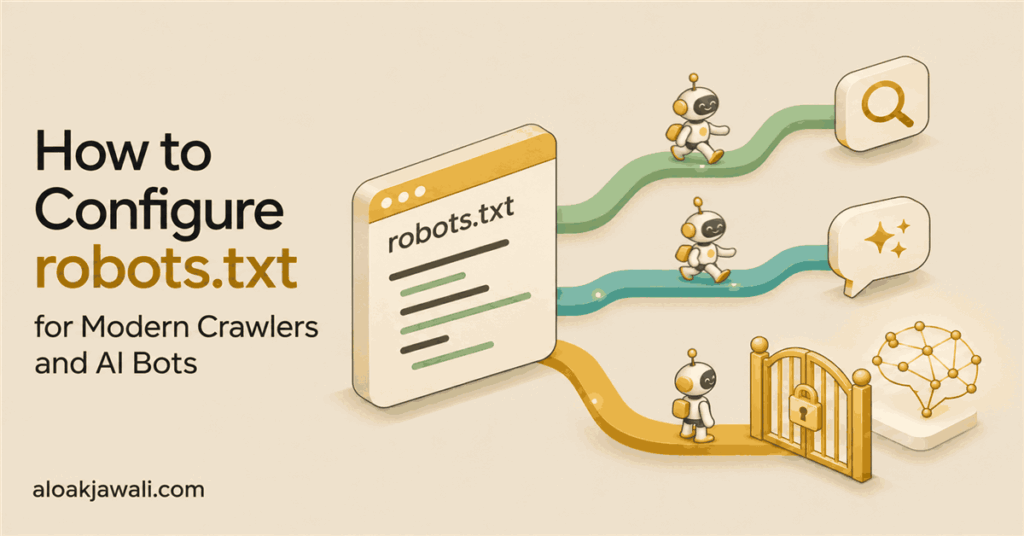
- our guide on how to configure robots.txt for modern crawlers and AI bots.
Part 7: eCommerce SEO
Online stores have extra checks because catalogs create thousands of near-duplicate URLs.
| # | Check | Why it matters | Verify with | Priority |
| 54 | Product structured data (name, price, availability, reviews) matches the page | Powers product rich results and shopping surfaces | Rich Results Test | Critical |
| 55 | Merchant Center feed is accurate and synced | Mismatched prices or stock cause disapprovals | Merchant Center diagnostics | High |
| 56 | Product descriptions are unique, not manufacturer copy | Duplicate copy gives search engines no reason to choose you | Spot-check against other retailers | High |
| 57 | Faceted navigation is controlled (canonicals, noindex, or robots rules for low-value filter combinations) | Filters can create endless crawlable URLs | Crawler + Search Console indexing report | High |
| 58 | Out-of-stock pages handled deliberately | Keep temporarily unavailable products live; redirect permanently discontinued ones to the closest alternative | Product status audit | High |
| 59 | Category pages have helpful intro copy and internal links | Category pages target your highest-value commercial searches | Visual check | High |
| 60 | Shopify robots rules edited through robots.txt.liquid using Shopify’s default groups | Replacing the file outright removes Shopify’s default rules | Compare the rendered file with the original | High |
| 61 | Product images are multiple, high-quality, and well described | Supports image search and buyer confidence | Image audit | Nice to have |
And More: Local SEO Quick Checks
Skip this section if you don’t serve customers at a physical location or within a local area.
| # | Check | Why it matters | Verify with | Priority |
| 62 | Google Business Profile is verified and complete | Drives map and local pack visibility | Business Profile dashboard | Critical (local) |
| 63 | Name, address, and phone are identical everywhere | Inconsistent details confuse search engines and customers | Search your business name | High |
| 64 | LocalBusiness structured data on location pages | Clarifies address, hours, and service area | Schema Markup Validator | Nice to have |
Where to Start: A Priority Order
| When | What to do |
| Week 1 | Every Critical item: items 1, 3, 8–10, 12, 13, 20, 31, 45, 46, 54 (plus 62 for local businesses) |
| Month 1 | High items in Setup, Technical, and On-Page |
| Month 2 | High items in AEO, GEO, Off-Page, and eCommerce |
| Ongoing | AI sections monthly, and the full checklist quarterly or after any redesign, migration, or platform change |
Copy-and-Paste Critical Checklist
- Search Console verified and sitemap submitted
- robots.txt at root, returns HTTP 200, under 500 KiB
- No accidental Disallow: /; CSS and JavaScript crawlable
- Important pages indexable (no stray noindex)
- HTTPS everywhere, one preferred host
- Mobile pages match desktop content
- Each page targets one clear topic and intent
- No bought or unqualified paid links
- OAI-SearchBot, Claude-SearchBot, and PerplexityBot allowed
- Bingbot allowed
- Product structured data matches each product page (stores)
- Google Business Profile verified (local businesses)
Frequently Asked Questions
What is the difference between SEO, AEO, and GEO?
SEO helps pages rank in search results. AEO shapes content so search engines can use it as a direct answer in AI Overviews, AI Mode, and featured snippets. GEO, also called LLM SEO, helps AI assistants like ChatGPT, Claude, and Perplexity find, trust, and cite your pages. All three depend on the same technical foundation.
What should I fix first?
Start with crawl access and indexing. If Googlebot, Bingbot, or AI search crawlers can’t reach a page, nothing else on this list matters for that page. The Critical items in the Week 1 row above are the minimum.
Do I need special schema for AI Overviews or ChatGPT?
No. Google doesn’t require special structured data for its AI features. Standard, valid markup that matches the visible page, such as Organization, BlogPosting, BreadcrumbList, or Product, is enough.
Is FAQ schema still worth adding?
Only where a page genuinely answers common questions. Google stopped showing FAQ rich results on May 7, 2026. The markup is still valid, and Google says it can still use it to understand pages, but it no longer earns a visible enhancement in search.
How often should I run this checklist?
Run the full checklist quarterly, and again after any redesign, migration, or platform change. Review the AEO and GEO sections monthly, because AI crawler rules, reporting tools, and opt-out controls change more often than classic SEO.
Is LLM SEO different from GEO?
Not in practice. Both aim to get content cited in answers generated by large language models. This checklist treats LLM SEO as part of GEO, so you don’t need a separate strategy.
The complete SEO checklist in 2027 is one checklist, not three. Classic SEO gets you crawled, indexed, and ranked. AEO makes your answers easy to lift into AI Overviews. GEO makes you visible and trustworthy to AI assistants. Fix the Critical items first, measure AI traffic separately, and recheck the AI sections every month.